English
Teresa Heathcote - Independent English Consultant
Being a literate child is incredibly important—it lays the foundation for lifelong learning, personal growth, and success in many areas of life. I am passionate about giving all children the opportunity to be successful writers through CPD that is detailed, research led and expertly delivered with a large dose of common sense!
Latest English courses
Making Transcription
Work
Making Transcription Work – an extremely popular session that focuses on how to make dictation work in a class of 30 with or without a TA! We will cover the 5 steps of dictation and beyond step 5 for those pupils, particularly in Y2 and KS2, who are developing independence.
Date - Friday 27th November 2026
Time - 9:30am till 11:30am
ONLINE
Cost £70 per delegate
A recording can be purchased for those unable to attend.

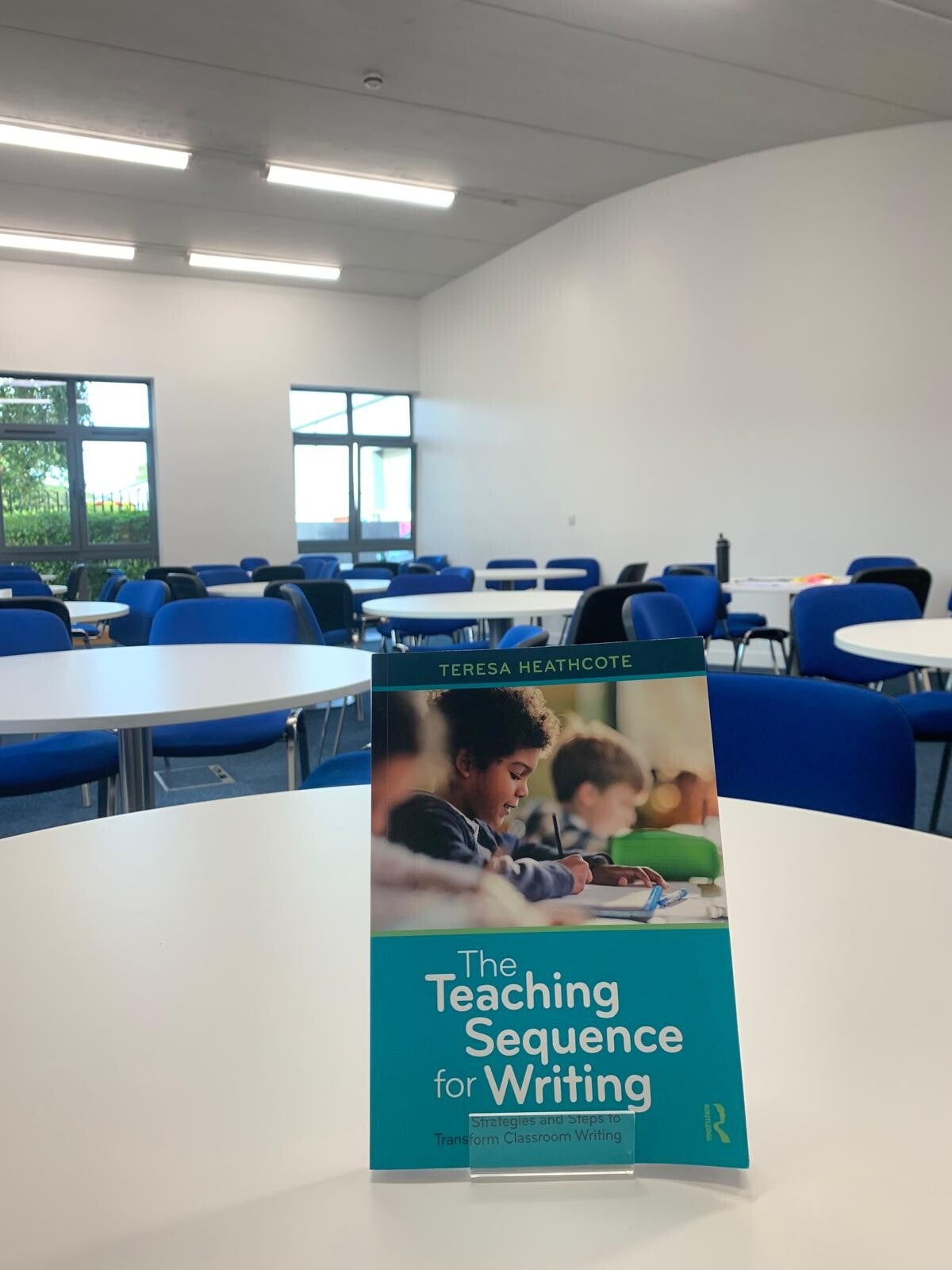
The Teaching
Sequence for Writing
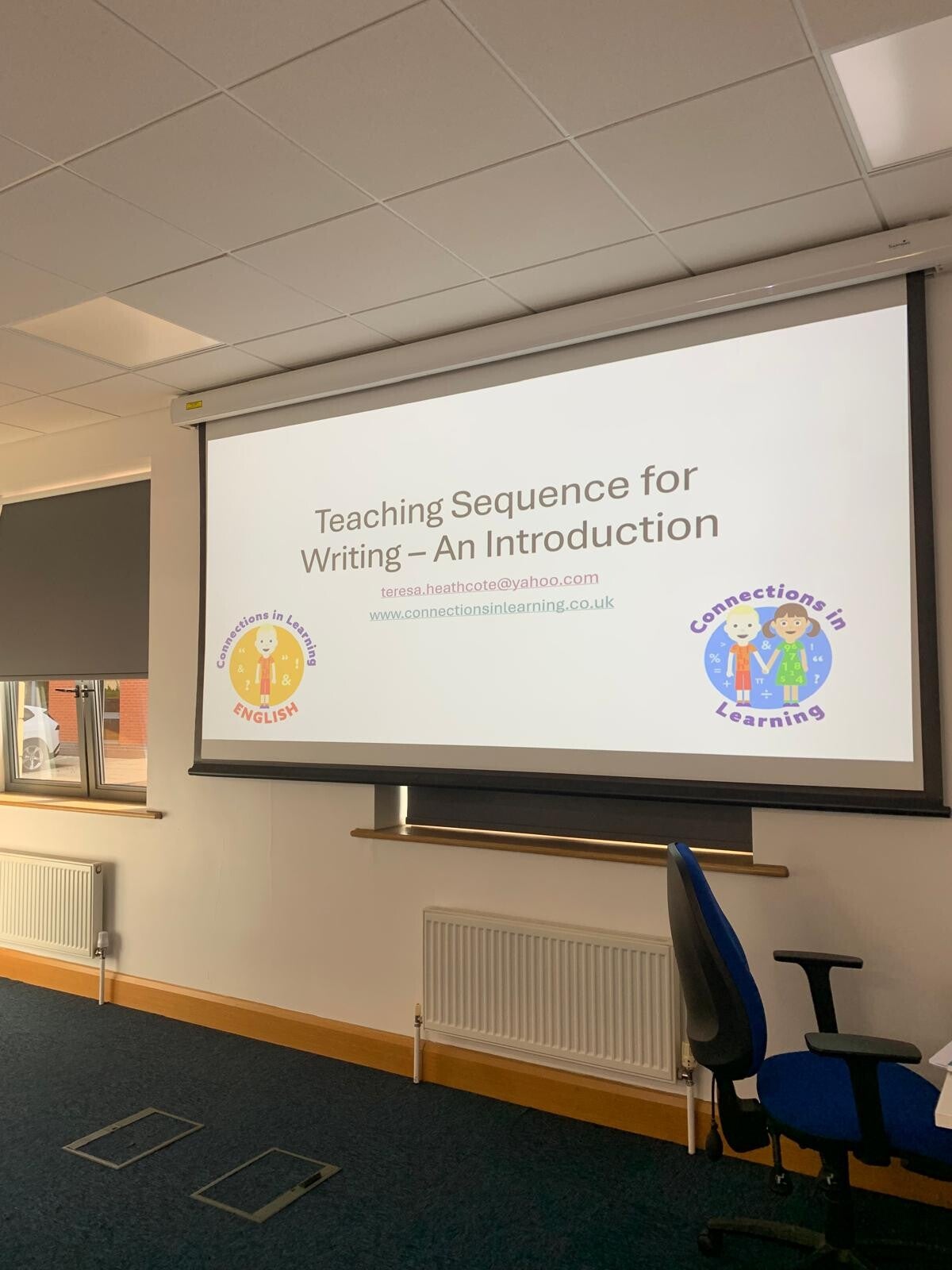
The Teaching Sequence for Writing – a review of the TSfW for new schools or anyone working in a school that already uses it and hasn’t received training. This will focus on the 6 steps – Immerse, Analyse, Skills, Plan, Write, Review and will have a strong element of vocabulary development and oracy.
Date - Thursday 26th November 2026
Time - 4pm till 6pm
ONLINE
Cost £70 per delegate
A recording can be purchased for those unable to attend.

The teaching Sequence for Writing in EYFS
NEW !!!! Teaching Sequence for Writing in EYFS
A new course that caters particularly for practitioners in EYFS. Reception has become a critical focus for the development of writing and I have written a 3-week teaching sequence that can be used in both F1 and F2. This addresses the points in the Writing Framework as well as maintaining a love for writing in the Early Years.
Email for details of future sessions.
Cost £100 per delegate - 3 week teaching block resources included.
A recording can be purchased for those unable to attend.
English Professional Development and support

Teaching Sequence for writing
Teaching children to be excited, accomplished and successful writers is not easy. In any one classroom there is a huge range of abilities, reading backgrounds and developmental stages that have an inevitable impact on the strategies we use to teach writing.
The Teaching Sequence for Writing consists of 6 simple steps that lead to a quality outcome and can be followed to write any genre, any text type, any year group. Once you understand how children learn to write successfully, then there is no need to purchase expensive schemes – knowledge is power!
I have developed the Teaching Sequence for Writing over the last 30 years – constantly using research evidence, Ofsted requirements and anecdotal school-based evidence to improve and update the process. I have paid particular attention to the following:
Purpose over text type
The development of new vocabulary
Spelling when writing
Analysis – more effective use of the WAGOLL
Planning successfully with pupils
Review sessions that add value

Transcriptional Fluency
The writing landscape is changing!
The foundation knowledge of writing – transcriptional fluency – has been a key component of the Teaching Sequence for Writing for a couple of years. This work has now been backed up by the messages coming from Kirsty Godfrey – lead HMI for English and recent Ofsted inspections. The Writing Framework, July 2025, has a strong element of transcription.
I have been working with the DfE on the Priority Literacy project – 40 schools in Nottingham City – and have developed a programme of teaching transcriptional fluency in EYFS and KS1 and to pupils who need to develop it in KS2.
This 5-step programme incorporates dictation that can be delivered to a class of 30 year 1 pupils – with or without a teaching assistant and used as an intervention.
'The 5 step programme improved the self esteem of the pupils I work with. Before they saw writing as too hard and opted out - now they see it as achievable - amazing!'
TA - Nottingham City

Oracy
‘Schools make some use of oral composition as part of writing lessons. However, oral composition, such as retelling a familiar story, is not often seen as an end goal. This means that pupils at the earliest stages of learning to write have limited opportunities to practise, which in turn affects their ability to write coherently. This is because they are not given sufficient time to plan and consider sentence construction, grammar or vocabulary orally before being asked to write.’ Telling the Story Ofsted October 2023
This session will focus on the use of Oracy to improve reading and writing outcomes. We will discuss strategies to ensure that all pupils are involved in learning through talk – regardless of ability.
The training will include:
- Strategies to explore ‘learning through talk’
- Grammar outcomes ‘making a pledge’ – ensuring talk is included in writing outcomes
- Improve oral rehearsal – it’s not just learning a story
- Different types of classroom talk

Enabling Lower Attainers to Succeed
Writing involves transcription (spelling and handwriting) and composition (articulating ideas and structuring them in speech, before writing them down). Pupils need sufficient capacity in their working memory to plan, compose and review effectively. This requires transcription skills to be secure. Ofsted July 2022
This training session will focus on the support offered to pupils who find transcription skills challenging - incorrect letter formation, unable to hold a sentence long enough to write it and the incorrect spelling of unfamiliar words. These pupils often require additional support during the writing process.
This session will explore the most effective ways to support pupils who find writing challenging. We will discuss the following:
What do we ask our low achievers to complete?
Do we ask too much of teaching assistants when supporting the low achievers?
What are our expectations of the low achievers?
Is task completion overshadowing achievement?
This session has been designed for teaching assistants to reflect on practice, to be more effective in supporting the lower achievers to learn and for teachers to consider the expectations of the low achieving pupils.

Staff meetings and Twilights
Bespoke one off or series of staff meetings or twilights - possible content;
- The Teaching Sequence for Writing
Using vocabulary to improve writing
Developing spelling to improve writing
Using oracy to improve writing
Using grammar to improve writing
- Making dictation work in KS1 and KS2
- Transcription and Oracy -the Keys to Writing Success
- Enabling the Lower Attainers to Succeed
- Developing Greater Depth Writers
- Assessment – how to accurately assess writing when you’re not in Y6
- Reading – developing fluency
- Using the key skills of reading to improve comprehension
Cost;
Staff meetings £250 + VAT
Twilights £300 + VAT


"I am so grateful to have spent the time planning with you. I now understand that there is a sequence to teaching writing and I can apply this to any writing outcome and any context. No need for schemes anymore!"
KS1 Lead, Nottingham City